Closure Type
Climbing shoes come in three closure styles, each with trade-offs that matter as you develop your climbing.
+
Your first pair of climbing shoes changes everything. Here is how to pick the right ones without overspending or overcomplicating it.
Rental shoes get the job done for your first few sessions at the gym. But once climbing clicks and you start going regularly, your own pair of shoes is the single best investment you can make. The difference in grip, sensitivity, and confidence is immediate and tangible.
The good news: you do not need to spend a fortune. The best beginner climbing shoes are designed to be comfortable, durable, and forgiving while you learn proper footwork. This guide cuts through the marketing noise and tells you exactly what to look for, what to avoid, and which shoes deliver the best value for new climbers in 2026.
Climbing is a footwork sport disguised as an upper-body workout. Watch any experienced climber and you will notice something counterintuitive: they barely use their arms. Their feet do most of the work, pressing into holds with precision and carrying the bulk of their weight. The shoes on those feet are the most critical piece of equipment they own.
Climbing shoes differ from regular trainers in three fundamental ways. First, the rubber. Climbing shoe rubber is softer and stickier than anything you will find on street shoes, gripping textured surfaces and tiny edges that would be impossible in trainers. Second, the fit. Climbing shoes wrap tightly around your foot with no dead space, giving you direct feedback from the hold through the sole. Third, the shape. Even a flat beginner shoe has a slight point at the toe, concentrating force onto a smaller area so you can stand on holds the width of a coin.
This is why rental shoes feel so different from a properly fitted pair. Rentals are stretched out, the rubber is worn smooth, and the fit is generic. They work, but they work like borrowed gloves two sizes too big. Your own shoes, fitted properly, transform what feels possible on the wall. Moves that seemed desperate in rentals become manageable. Footwork that felt uncertain becomes precise. If you are serious about improving your climbing technique, shoes are where it starts.
There is no rush to buy shoes before you know you enjoy climbing. Rental shoes exist for exactly this reason, and every gym stocks them. At $3 to $8 per session, they are a sensible way to try the sport without commitment. Our beginner's guide to bouldering covers everything you need for those first sessions, rentals included.
The tipping point usually comes around your fifth to tenth session. By then, you have noticed that rental shoes slip on holds you feel you should be sticking. You are climbing regularly enough that the rental cost is adding up. You have started caring about your footwork and want better feedback from the wall. These are all signs that owning your own pair will meaningfully improve your experience.
Here is a simple calculation. If you climb twice a week and pay $5 per rental, that is $40 a month. A solid beginner shoe costs $75 to $100. Your shoes pay for themselves within two to three months, and they will last six to twelve months of regular use. From a pure cost perspective, buying makes sense once you are climbing more than once a week.
Beyond cost, the performance jump is real. Owning shoes you have broken in and trust makes you a more confident climber. You learn footwork faster because you get consistent feedback. And frankly, you avoid the hygiene lottery of shared rental shoes. Check our what to pack guide for the full list of gear to bring once you have your own shoes.
Climbing shoe specs can be confusing. Here is what actually matters for beginners, stripped of the jargon.
Climbing shoes come in three closure styles, each with trade-offs that matter as you develop your climbing.
Downturn describes how much a shoe curves downward from heel to toe. It is one of the most important features to understand, and one of the most common areas where beginners go wrong.
Flat shoes have no downturn. The sole is essentially level, which distributes pressure evenly across your foot. This makes them comfortable for longer sessions and effective on vertical walls and slab, which is where beginners spend most of their time. Every shoe recommended in this guide is flat.
Aggressive (downturned) shoes curve the toes downward, concentrating force at the tip. They excel on steep overhangs and tiny footholds, but they are painful, fatiguing, and overkill for the terrain beginners climb. You can explore these later as your skills progress.
The rubber on the sole is what actually grips the wall, and it varies significantly between brands. Quality rubber sticks to holds, edges precisely, and lasts longer before wearing through. Budget rubber does none of these things particularly well.
Established climbing brands use proprietary rubber compounds developed specifically for rock. La Sportiva uses FriXion RS, Scarpa uses Vision, Five Ten uses the legendary Stealth C4, and Black Diamond uses Neo Fuse. All of these perform well for beginners. The differences between them are subtle and only become meaningful as you advance.
Where rubber quality becomes obvious is in ultra-budget shoes from non-climbing brands. Shoes priced under $50 almost always use generic rubber that slips on smears and wears through in weeks. The difference between $40 generic rubber and $75 climbing-specific rubber is night and day. This is not the place to cut corners.
The fit of a climbing shoe should be snug without being painful. Your toes should be touching the front of the shoe with a slight curl, but you should not be in genuine discomfort. There should be no dead space inside the shoe, particularly around the heel and under the arch. A loose climbing shoe is a sloppy climbing shoe.
One critical point: climbing shoe lasts (the foot-shaped mold they are built around) vary dramatically between brands. La Sportiva tends to run narrow. Scarpa is wider, especially in the Origin model. Black Diamond fits somewhere in between. This is why trying multiple brands is essential, and why someone else's perfect shoe might be wrong for your foot. We cover more gear considerations in our gear essentials guide.
Climbing shoe sizing is notoriously inconsistent across brands. Your street shoe size is a rough starting point, but it rarely translates directly. Here is a reliable process for finding the right fit.
These four shoes have earned their reputation through years of proving themselves on the feet of new climbers worldwide. Each one is available on our bouldering shoes page with current pricing and detailed reviews.
Best overall for beginners
The Tarantulace is the shoe most often recommended by instructors, gym staff, and experienced climbers. There is a reason it has been the default beginner recommendation for years: it does everything right without doing anything wrong. The lace-up closure allows precise fit adjustment, the FriXion RS rubber grips well on all hold types, and it is comfortable enough for hour-long sessions without making your feet scream.
The flat profile makes it excellent on slab and vertical terrain, which is where new climbers spend 90% of their time. Durability is above average for the price point, and the shoe holds its shape well over months of use. The only real drawback is that it runs slightly narrow, so climbers with wider feet should try the Scarpa Origin instead.
Best for wide feet
If La Sportiva shoes feel too narrow, the Scarpa Origin is your answer. Built on a wider last, it accommodates broader feet without sacrificing performance. The Vision rubber provides reliable grip, and the lace-up closure lets you fine-tune the fit across the whole foot. Scarpa's build quality is consistently excellent, and the Origin reflects that pedigree at a beginner-friendly price.
The Origin is slightly more comfortable out of the box than the Tarantulace, which can be a real advantage for climbers who are still building tolerance for tight-fitting shoes. It performs well on all angles and hold types you will encounter as a beginner. The trade-off is a marginally higher price point and slightly less precision on very small footholds, which will not matter until you are climbing harder grades.
Best budget option
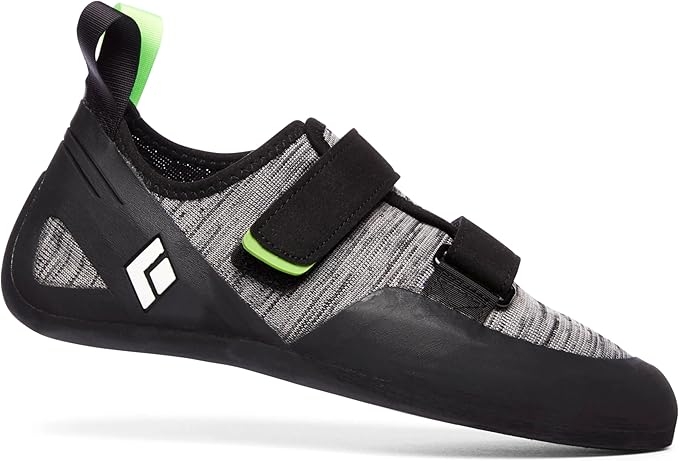
The Momentum is proof that you do not need to break the bank for a capable first shoe. At $75, it undercuts most competitors while still delivering climbing-specific rubber and a well-thought-out design. The velcro closure makes it the fastest shoe to get on and off, which new climbers quickly learn to appreciate during sessions.
Black Diamond's Neo Fuse rubber is good, though not quite at the level of La Sportiva's or Five Ten's compounds. The shoe is comfortable out of the box with minimal break-in required. Where it falls short compared to pricier options is in long-term durability; the rubber wears faster, especially if your footwork is still developing. For climbers who want to spend as little as possible on a legitimate climbing shoe, the Momentum is the smart choice.
Best for versatility
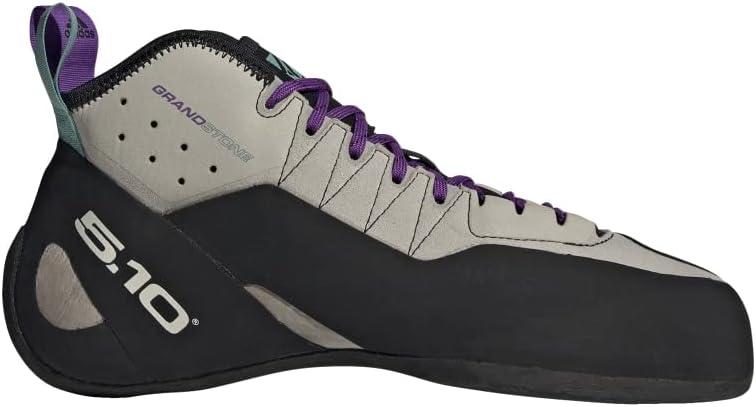
The Grandstone sits at the top of the beginner price range but justifies it with Five Ten's legendary Stealth C4 rubber, widely regarded as the stickiest compound in climbing. If you are someone who wants to buy once and not worry about upgrading for a while, the Grandstone is worth the extra spend. It bridges the gap between beginner and intermediate, performing well as your skills develop.
The shoe handles everything from slab to moderate overhangs without feeling out of its depth. The lace-up closure is straightforward, and the overall fit is medium-width, suiting most foot shapes. The main downside is that Five Ten sizing can be inconsistent, so trying before buying is especially important with this model.
Browse all of these shoes with current pricing and user ratings on our bouldering shoes category page.
| Shoe | Closure | Downturn | Rubber | Price | Best For |
|---|---|---|---|---|---|
| La Sportiva Tarantulace | Lace-up | Flat | FriXion RS | $89 | Best overall for beginners |
| Scarpa Origin | Lace-up | Flat | Vision | $99 | Best for wide feet |
| Black Diamond Momentum | Velcro | Flat | Neo Fuse | $75 | Best budget option |
| Five Ten Grandstone | Lace-up | Flat | Stealth C4 | $110 | Best for versatility |
Prices are approximate and may vary by retailer and size. All shoes listed are flat-profile, beginner-friendly models.
How much you should spend depends on how often you plan to climb and how long you want the shoes to last.
Shoes in this range from non-climbing brands use generic rubber that offers poor grip and wears through quickly. You will replace them within weeks of regular use. If budget is truly constrained, you are better off renting until you can afford a shoe in the $60 to $90 range.
This is where the best beginner value lives. The Black Diamond Momentum ($75) and La Sportiva Tarantulace ($89) both sit in this range. You get climbing-specific rubber, proper construction, and a shoe that will last 6 to 12 months of regular use. This is our recommended budget for most new climbers.
The Scarpa Origin ($99) and Five Ten Grandstone ($110) fall here. These shoes offer better rubber, better construction, and more room to grow into as your climbing improves. A good choice if you are confident you will stick with climbing and want to delay upgrading.
Shoes above this price point are typically aggressive, downturned performance models designed for experienced climbers. They are uncomfortable by design, require good footwork to benefit from, and wear out faster from beginner technique. Wait until you are climbing consistently at intermediate grades before investing at this level.
Aggressive shoes are designed for steep overhangs and small footholds. Beginners climb mostly on vertical and slab terrain where a flat shoe performs better and hurts far less.
Pain does not equal performance. A shoe that causes genuine discomfort will cut your sessions short and discourage you from climbing. Snug is good. Painful is not.
The best shoe is the one that fits your foot. A respected brand with the wrong last shape will underperform a lesser-known shoe that matches your foot anatomy.
Beginner shoes wear out faster because new climbers drag their toes more. Save the premium shoes for when your footwork improves and you can make them last.
Climbing shoes are designed to be worn barefoot. Socks reduce sensitivity, create slippage inside the shoe, and prevent the rubber from conforming to your foot shape.
Foot shapes vary enormously. Try at least three different brands and models. What works brilliantly for someone else may be wrong for your feet.
A little care goes a long way in extending the life of your climbing shoes. These habits are simple and take almost no time.
Never leave climbing shoes sealed in a bag after climbing. The moisture from your feet breeds bacteria and breaks down the shoe's internal lining. Unbuckle or unlace them, pull the tongue open, and leave them in a ventilated area to dry. Some climbers stuff newspaper inside to absorb moisture faster.
Car boots in summer, radiators, and tumble dryers will warp the rubber and delaminate the sole from the upper. Heat is the enemy. Air dry at room temperature, always.
Dust, chalk, and grime on your soles reduce grip. A quick wipe on your trouser leg or a brush with your hand before stepping onto the wall makes a noticeable difference on technical footwork. Some climbers carry a small mat to stand on between problems.
When the rubber on the toe wears thin, many shoes can be resoled for roughly half the cost of buying new. Resoling is economical and environmentally sensible. The key is to send them in before the rubber wears completely through to the rand, as that makes resoling more expensive or impossible.
Walking around the gym in climbing shoes wears down the sole on flat surfaces, which is the least useful place to spend your rubber. Wear approach shoes or sandals between problems and save the climbing rubber for climbing.
Browse our curated selection of beginner-friendly climbing shoes with current prices, ratings, and detailed breakdowns.
Plan to spend between $60 and $110. This range covers all the reliable beginner options from trusted brands. Spending less often means poor rubber that wears out quickly. Spending more usually gets you features you will not benefit from yet.
For beginner shoes, aim for a snug fit with no dead space, but without pain. Your toes should touch the end of the shoe and be slightly curled, not scrunched. You can size down more aggressively later as your tolerance and technique develop.
With regular use (2-3 sessions per week), a quality beginner shoe typically lasts 6 to 12 months before the rubber wears through. Good footwork technique extends shoe life significantly. Many shoes can also be resoled to extend their lifespan.
Yes. Beginner shoes are designed to be versatile and work well for both disciplines. As you advance and specialise, you may want separate shoes, but a flat, all-round shoe handles everything a beginner will encounter.
Both work well. Lace-ups offer a more customisable fit, which is helpful if you are still learning what feels right. Velcro is more convenient for quick on-off between problems. Try both and see which you prefer.
Join our community for honest gear reviews, technique tips, and new gym recommendations
Complete beginner's guide to climbing
Equipment recommendations and buying advice
13 essential techniques to climb better
Unwritten rules and social guidelines